Wondering is shrimp good for weight loss? This powerful seafood offers lean protein, few calories, and can support your journey to a healthier you.
Shrimp is a nutrient-rich food that can be a valuable addition to a weight loss diet. It has low calories and high protein, making it great for losing weight.

100 grams of shrimp have about 84 calories, 20 grams of protein, and very little fat. Knowing the shrimp nutrition facts helps you make better diet choices.
The benefits of shrimp for weight loss are many. It’s a fantastic choice for those trying to manage their weight well.
Key Takeaways
- Shrimp is low in calories and high in protein.
- It is a nutrient-rich food that supports weight loss.
- Shrimp contains minimal fat, making it a healthy choice.
- Incorporating shrimp into your diet can aid in weight management.
- Understanding shrimp nutrition facts is key for a healthy diet.
The Nutritional Powerhouse: Understanding Shrimp’s Profile
Shrimp is not just tasty; it’s also packed with nutrients that help keep you healthy and manage your weight. Its nutritional profile is impressive, making it a great choice for those trying to lose weight or stay healthy.
Calorie Content and Macronutrients
Knowing what’s in shrimp is key to seeing how it fits into a weight loss diet. It’s low in calories and high in protein, making it perfect for weight management.
Protein, Fat, and Carbohydrate Breakdown
Shrimp is mostly protein, with a 100-gram serving giving you about 20 grams. It has little fat, mostly the good kind, and very few carbs. This makes shrimp great for low-carb diets.
Caloric Value Per Serving
A 100-gram serving of shrimp has 85-90 calories. This is much less than many other protein sources. Its low calorie count makes it a good choice for those watching their calories.

Essential Vitamins and Minerals in Shrimp
Shrimp is not just about macronutrients; it’s also full of vitamins and minerals that boost health and metabolism.
B Vitamins and Their Role in Energy Production
Shrimp is a good source of B vitamins like B12, niacin, and riboflavin. These vitamins are key for energy production and metabolic processes. They help the body use the nutrients from food.
Mineral Content: Selenium, Zinc, and Iodine
Shrimp is rich in minerals like selenium, zinc, and iodine. Selenium acts as an antioxidant, protecting cells. Zinc boosts the immune system, and iodine is good for the thyroid, helping with metabolism.
How Shrimp Compares to Other Protein Sources
When looking at protein sources for weight loss, comparing nutritional profiles is important.
Shrimp vs. Chicken and Beef
Shrimp has fewer calories and less fat than chicken and beef. While chicken and beef are healthy, shrimp is a lower-calorie option that’s high in protein and nutrients.
Shrimp vs. Plant-Based Proteins
Shrimp is a complete protein with all essential amino acids, unlike some plant-based proteins. But, plant-based proteins have fiber and other nutrients shrimp lacks. A balanced diet with different protein sources is best.
Is Shrimp Good for Weight Loss? The Science Says Yes
Shrimp is packed with protein and low in calories, making it great for weight loss. It’s a key part of a diet aimed at losing weight.
High Protein Content and Its Effect on Satiety
Shrimp is very high in protein, which helps with weight management. Protein takes more energy to digest than carbs or fat. This boosts your metabolism.
How Protein Reduces Hunger Hormones
Protein lowers ghrelin, the hunger hormone. Eating shrimp can help you feel less hungry.
Staying Fuller Longer with Shrimp-Based Meals
Shrimp makes you feel full because of its protein. This is good for those trying to control their weight.
The Advantage of Low Calorie Density
Shrimp is not only high in protein but also very low in calories. This makes it perfect for weight loss.
Volume Eating Principles with Seafood
Seafood like shrimp lets you eat more without eating too many calories. This helps with weight loss by keeping you full.
Calorie-to-Weight Ratio Benefits
Shrimp’s low calorie-to-weight ratio makes you feel full without adding too many calories.
Research and Studies on Seafood in Weight Management
Many studies have looked at seafood, including shrimp, for weight management. They show that high protein, low-calorie foods help with weight loss.
Clinical Findings on Protein-Rich Diets
Studies have found that protein-rich diets lead to weight loss and better body shape.
Long-Term Weight Maintenance with Seafood Consumption
Eating seafood like shrimp helps with weight loss and keeping it off over time.
- Shrimp’s high protein content supports satiety and weight loss.
- Low calorie density makes shrimp an ideal weight loss food.
- Research supports the inclusion of seafood in weight management diets.
Metabolism Boosters: How Shrimp Enhances Fat Burning
Shrimp is packed with nutrients that boost your metabolism. It’s a lean protein source and rich in minerals and vitamins. These nutrients are key for your body’s metabolic function.
The Thermogenic Effect of Protein
Protein-rich foods like shrimp have a thermogenic effect. This means they need more energy to digest. So, they help burn more calories.
Calorie Burning During Digestion
Digesting protein increases your metabolic rate temporarily. This is called the thermic effect of food (TEF). Shrimp, being high in protein, boosts this effect a lot.
Metabolic Rate Increases After Consumption
Eating shrimp can make your metabolic rate go up after meals. This helps your body burn more calories all day long.

Key Nutrients That Support Metabolic Function
Shrimp is full of nutrients that help your metabolism, like selenium and antioxidants.
Selenium’s Role in Metabolism
Selenium is vital for a healthy metabolism. It acts as an antioxidant, protecting cells and supporting metabolic function.
Antioxidants and Cellular Health
The antioxidants in shrimp keep cells healthy. This ensures metabolic processes work well.
Iodine Content and Thyroid Health Connection
Shrimp is also a good source of iodine. This mineral is key for thyroid function.
How Thyroid Function Affects Weight
The thyroid gland controls metabolism. Getting enough iodine is important to avoid thyroid problems. These problems can cause weight issues.
Optimal Iodine Intake from Seafood
Eating shrimp helps you get enough iodine. This supports thyroid health and a healthy metabolism.
Addressing Common Concerns About Eating Shrimp
Shrimp is often seen as a healthy choice for weight loss. Yet, many myths surround its consumption. This section aims to clear up these misconceptions with current research.
Cholesterol Content: Separating Myth from Reality
Shrimp gets a bad rap for its cholesterol. But studies show it doesn’t raise blood cholesterol much. It’s key to understand the difference between dietary and blood cholesterol.
Dietary vs. Blood Cholesterol
Dietary cholesterol, like in shrimp, has little effect on blood cholesterol. Experts say healthy people can eat shrimp without worrying about their blood cholesterol.
Current Research on Shellfish and Heart Health
New studies suggest shrimp may not raise heart disease risk. Its omega-3s and other nutrients are good for the heart. Eating shrimp in moderation can be good for your heart.
Mercury and Contaminants: Safety Assessment
Mercury is a worry with seafood. But shrimp has low mercury levels, making it safer than other seafood.
Shrimp’s Position on the Mercury Scale
Shrimp is a low-mercury choice, great for eating often. This is key for pregnant women and kids to avoid high-mercury fish.
Sourcing and Quality Considerations
Shrimp quality and safety depend on where it’s from. Opt for wild-caught or sustainably farmed shrimp to avoid contaminants. Look for certifications that show it’s sourced responsibly.
Navigating Allergies and Sensitivities
Shellfish allergies are a big deal for some. Knowing the signs and finding alternatives is important for those affected.
Signs of Shellfish Allergies
Shellfish allergy symptoms include hives, itching, and swelling. Stomach cramps, diarrhea, and anaphylaxis are more severe. If you have these symptoms, get medical help right away.
Alternatives for Those with Restrictions
If you’re allergic to shellfish, try chicken, turkey, or plant-based foods. These options can give you the nutrients you need without the allergens.
Preparation Methods That Preserve Shrimp’s Weight Loss Benefits
To keep shrimp’s weight loss benefits, choose the right cooking methods. Shrimp is low in calories and full of nutrients. This makes it perfect for those trying to lose weight. But, how you cook it can change its nutritional value.
Optimal Cooking Techniques for Nutrition Retention
Certain cooking methods can harm shrimp’s nutrients. High heat or lots of oil can reduce protein quality and add calories.
Steaming and Boiling Benefits
Steaming and boiling are great for shrimp. They keep the protein and calories low. Steaming is also good for keeping shrimp’s flavor and texture.
Grilling and Broiling Methods
Grilling and broiling are healthy ways to cook shrimp. They use little oil and keep nutrients in. Grilling adds a smoky taste without extra calories.
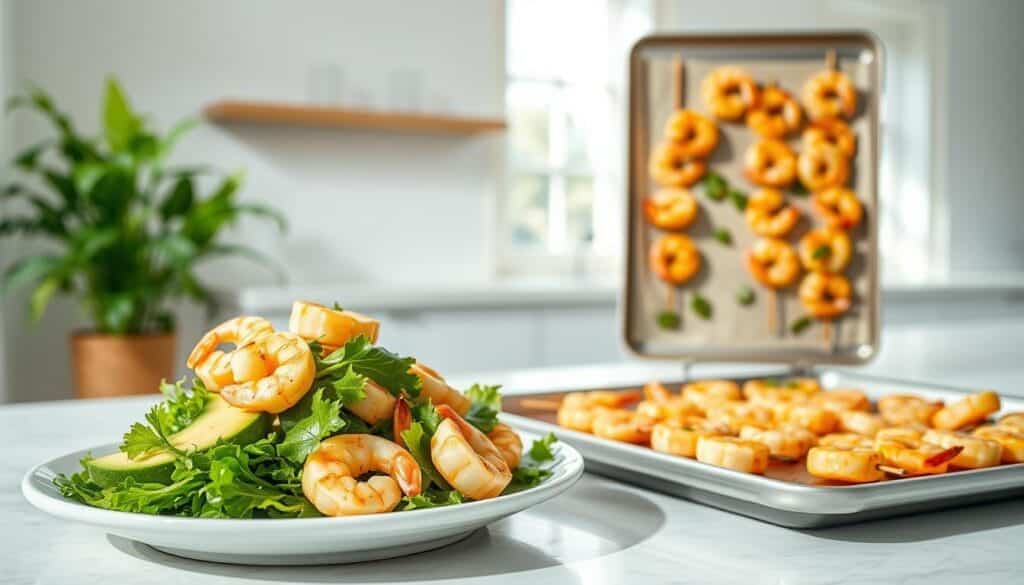
Flavor Enhancers Without Extra Calories
It’s easy to add flavor to shrimp without extra calories. The right herbs, spices, and marinades can do the trick.
Herb and Spice Combinations
Herbs and spices can make shrimp taste great. Try garlic and parsley or paprika and lemon zest for tasty dishes without extra calories.
Citrus and Vinegar Marinades
Citrus juice or vinegar marinades are also good. They add flavor and tenderize the shrimp. This makes them perfect for diet recipes.
Common Cooking Mistakes That Add Calories
While shrimp is healthy, some cooking mistakes can make it high in calories. Knowing these mistakes helps keep your meal nutritious.
Avoiding Breading and Frying
Breading and frying add a lot of calories. These methods should be avoided for healthy shrimp dishes.
Watching Out for High-Calorie Sauces
Using high-calorie sauces is another mistake. Choose low-calorie sauces or make your own with healthy ingredients.
Weight Loss-Friendly Shrimp Recipes Under 400 Calories
Adding shrimp to your diet can really help with weight loss. It’s full of protein and low in calories. This makes it perfect for tasty, healthy meals that help you lose weight.
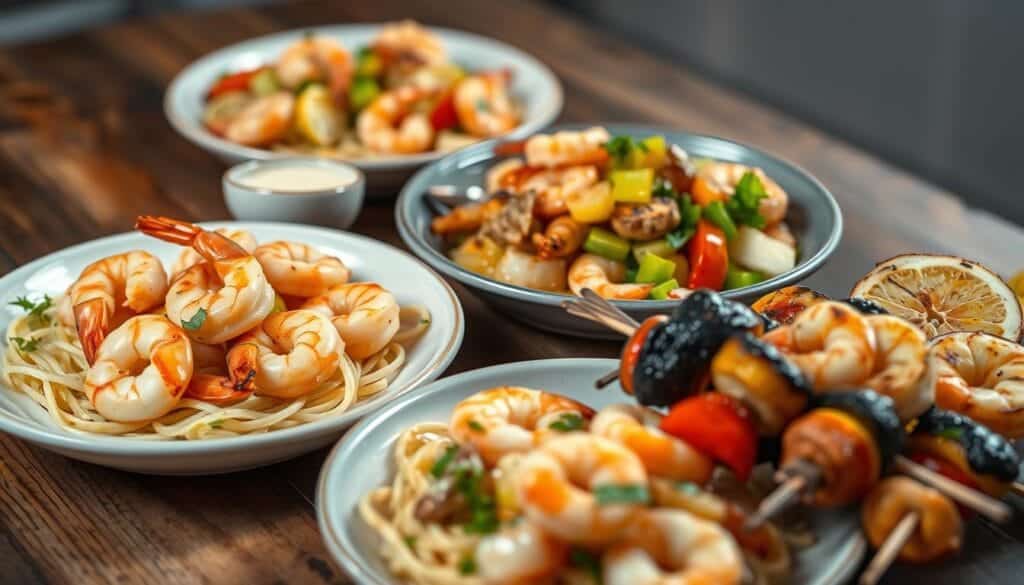
Quick Weeknight Shrimp Dinners
Shrimp dinners are great for busy weeknights. They’re fast to make and can be flavored many ways. Low calorie shrimp recipes like garlic shrimp stir-fry and shrimp skewers are both yummy and simple.
15-Minute Garlic Shrimp Stir-Fry
This stir-fry is a classic and can be ready in just 15 minutes. Just sauté garlic, add shrimp, and your favorite veggies. Serve over brown rice or cauliflower rice for a low-calorie meal. It’s a quick and nutritious shrimp recipe for diet.
Shrimp and Vegetable Skewers
Skewering shrimp and veggies like bell peppers, onions, and cherry tomatoes, then grilling them, makes for a healthy and easy dinner. Brush with olive oil and season with herbs for extra flavor without extra calories. This method is perfect for those looking for shrimp for healthy eating options.
Satisfying Shrimp Salads and Protein Bowls
Shrimp salads and protein bowls are not only delicious but also packed with nutrients. They’re perfect for a quick lunch or dinner. These dishes are great ways to add low calorie shrimp recipes to your meal plan.
Mediterranean Shrimp Salad
Combine cooked shrimp with mixed greens, cherry tomatoes, cucumber, feta cheese, and a drizzle of olive oil and lemon juice for a refreshing and healthy salad. This salad is a great example of a shrimp recipe for diet that is both satisfying and healthy.
Cilantro-Lime Shrimp Quinoa Bowl
Mix cooked shrimp with quinoa, black beans, diced tomatoes, cilantro, and a squeeze of lime juice. This bowl is a flavorful and nutritious meal that is under 400 calories and makes for a great shrimp for healthy eating option.
Batch Cooking and Meal Prep Strategies
Batch cooking and meal prep can save time during the week and ensure you have healthy meals ready. Shrimp is a great protein to use for meal prep due to its versatility. By preparing low calorie shrimp recipes in advance, you can have healthy meals ready throughout the week.
Prepping Shrimp for Multiple Meals
Cook a large batch of shrimp at once and use it in different meals throughout the week. For example, use it in salads one day, in a stir-fry the next, and in a seafood wrap another day. This strategy is perfect for incorporating shrimp recipes for diet into your daily meals.
Storage and Reheating Guidelines
Store cooked shrimp in airtight containers in the refrigerator for up to 3 days. Reheat it gently to prevent it from becoming tough. You can also freeze cooked shrimp for later use, making it a convenient option for shrimp for healthy eating meal prep.
Creating a Balanced Diet Plan with Shrimp
Creating a balanced diet plan with shrimp means knowing its nutritional benefits. It’s also about how to add it to your meals. Shrimp is tasty and good for your health, helping those who want to lose weight.
Determining the Right Portion Sizes
It’s important to know the right amount of shrimp to eat. Eating too little might not give you enough protein. But eating too much can add too many calories.
Weight Loss Portion Guidelines
A good serving size of shrimp is about 3 ounces or 85 grams. This is like 12 large shrimp. It gives you a lot of protein with not too many calories.
Visual Cues for Serving Sizes
Without a scale, you can use visual cues for shrimp. A serving size is as big as a deck of cards or the palm of your hand. This helps keep your portions the same.

How Often to Include Shrimp in Your Diet
How often you eat shrimp depends on your diet and what you like. For losing weight, eating shrimp in moderation is best.
Weekly Consumption Recommendations
Eating shrimp 1-2 times a week is a good start. This lets you enjoy its protein and low calories without too much.
Variety and Dietary Balance
It’s key to eat a variety of foods. Mixing shrimp with other proteins and lots of veggies gives you many nutrients.
Complementary Foods That Enhance Weight Loss
Adding shrimp with the right foods can help with weight loss. Foods rich in fiber and healthy fats are great.
Fiber-Rich Vegetables and Whole Grains
Shrimp with fiber-rich veggies like broccoli and spinach, and whole grains like quinoa, helps you feel full. It also supports losing weight.
Healthy Fat Pairings
Adding healthy fats like avocado and olive oil to shrimp dishes makes them taste better. It also helps you feel full and is good for your health.
Seafood Showdown: Shrimp vs. Other Options for Weight Loss
For those trying to lose weight, knowing the nutritional values of different seafood is key. Seafood is packed with protein, vitamins, and minerals, making it great for diets focused on weight loss. But, not all seafood is the same in terms of nutrition and benefits.
Nutritional Comparison with Popular Seafood Choices
When we compare shrimp to salmon and tuna, several things matter. These include calorie count, protein, and essential nutrients.
Shrimp vs. Salmon and Tuna
Shrimp usually has fewer calories than salmon and tuna. A 3-ounce serving of shrimp has about 85 calories. Salmon and tuna, on the other hand, have 175 to 210 and 150 to 200 calories, respectively. Salmon and tuna, though, have more omega-3 fatty acids, which are good for the heart and might help with weight loss.
Calorie and Protein Analysis
Shrimp, salmon, and tuna are all high in protein. Shrimp gives about 19 grams of protein per 3-ounce serving. Salmon and tuna offer around 20-22 grams per 3-ounce serving. Their high protein content helps with feeling full and keeping muscles during weight loss.

Budget Considerations and Accessibility
The cost and availability of seafood can affect what we eat. Shrimp, salmon, and tuna have different prices, depending on freshness, source, and location.
Fresh vs. Frozen Value
Frozen seafood is just as nutritious as fresh and can be more affordable. It’s often flash-frozen at peak freshness, keeping its nutrients intact.
Cost Per Gram of Protein
Looking at the cost per gram of protein helps in choosing seafood. Shrimp, when frozen, can be a budget-friendly protein option. But, prices can change based on the type and source of seafood.
Making Environmentally Conscious Choices
As we become more eco-conscious, the sustainability of seafood choices matters. Shrimp farming, like other aquaculture, can harm the environment.
Sustainable Shrimp Farming Practices
Some shrimp farms use sustainable methods to reduce environmental damage. These include integrated systems and eco-friendly feeds.
Certifications to Look For
Certifications like Best Aquaculture Practices (BAP) or Marine Stewardship Council (MSC) labels show seafood meets sustainability standards.
By looking at nutrition, cost, and environmental impact, we can make better seafood choices for weight loss. Whether it’s shrimp, salmon, tuna, or other seafood, a balanced diet is essential for losing and keeping off weight.
Conclusion: Making Shrimp Part of Your Weight Loss Journey
Adding shrimp to your diet can be very helpful for losing weight. It’s low in calories but packed with protein and nutrients. This makes it perfect for those trying to shed pounds.
Shrimp’s high protein content helps you feel full longer. This means you’re less likely to overeat. Plus, its low calorie count is great for keeping your diet in check, which is key for losing weight.
Knowing how shrimp aids in weight loss can motivate you to include it in your meals. It’s not only nutritious but also easy to cook in many ways. This makes shrimp a great choice for a healthy diet.
By adding shrimp to your meals and cooking it healthily, you can use its nutritional benefits to aid in weight loss. Is shrimp good for weight loss? Yes, it is, making it a great choice for your weight loss journey.
FAQ
Is shrimp good for weight loss?
Yes, shrimp is great for weight loss. It’s full of protein, low in calories, and packed with nutrients. This makes it a smart choice for anyone trying to lose weight.
What are the nutritional benefits of shrimp for weight loss?
Shrimp is low in calories but high in protein. It also has important vitamins and minerals like selenium and iodine. These help boost metabolism and support health, making it perfect for losing weight.
How does shrimp support satiety and weight management?
Shrimp’s high protein content helps you feel full and satisfied. This reduces the chance of overeating and aids in managing weight.
Are there any concerns about eating shrimp due to its cholesterol content?
Shrimp does have a bit of cholesterol, but it doesn’t usually raise blood cholesterol levels for most people. Its nutritional benefits make it a good choice when eaten in moderation.
How can I prepare shrimp to retain its weight loss benefits?
To keep shrimp’s benefits, cook it by grilling, sautéing, or steaming. Use flavor enhancers without adding extra calories. This way, you can enjoy shrimp while supporting your weight loss goals.
Can I include shrimp in my diet if I have seafood allergies?
If you’re allergic to seafood, it’s best to avoid shrimp. Always talk to a healthcare professional or a registered dietitian for advice on safe foods.
How often should I eat shrimp as part of a weight loss diet?
Include shrimp in your diet in moderation, about 1-2 times a week. Make sure it’s part of a balanced meal plan with various protein sources and nutrient-rich foods.
What are some healthy shrimp recipes for weight loss?
Try making quick and easy shrimp dishes like salads, protein bowls, or grilled shrimp with veggies. These can all be made under 400 calories and help with weight loss.
How does shrimp compare to other seafood options for weight loss?
Shrimp is a low-calorie, nutrient-dense seafood option compared to others. It’s a great choice for weight loss, but consider budget and environmental impact when choosing seafood.
What are the benefits of selenium and iodine in shrimp for weight loss?
Selenium and iodine in shrimp support thyroid health and metabolic function. This can help with fat burning and overall weight loss.