Is tuna healthy for weight loss? Many nutrition experts say yes—when eaten wisely, it can be a lean, protein-rich ally in your weight loss journey.
Tuna, a fish full of nutrients, is often chosen for weight management. It’s high in protein and low in calories, making it great for weight loss diets.

The nutritional benefits of tuna make it a good choice for managing weight. Healthline says a tuna-focused diet can lead to quick weight loss. This is because tuna is low in calories but high in protein.
But, can eating tuna all the time be healthy? Knowing how tuna fits into a balanced diet is key. It helps understand its benefits and drawbacks.
Key Takeaways
- Tuna is rich in protein and low in calories, making it suitable for weight loss diets.
- A tuna-based diet can lead to rapid weight loss.
- Sustainability of a tuna diet in the long term is questionable.
- Tuna can be part of a healthy weight management plan.
- Balanced diet and nutritional variety are critical.
The Nutritional Profile of Tuna
Tuna is packed with nutrients, making it a great choice for a healthy diet. Knowing its nutritional profile helps us see its value.

Protein Content and Amino Acid Profile
Tuna is very high in protein, perfect for boosting your protein intake. A 100g serving of canned tuna in brine has about 24.9g of protein. Fresh tuna has even more protein.
Tuna’s protein is full of essential amino acids. These are key for muscle repair and growth.
High protein tuna meals are great for muscle health and feeling full.
Calorie Count and Fat Content
Tuna is low in calories and fat, mainly when canned in brine. A 100g serving has about 109 kcal and 1.0g of fat. Fresh tuna has a bit more calories because of its fat content.
But tuna’s fat is mostly healthy omega-3 fatty acids. These are good for your heart.
Vitamins and Minerals in Tuna
Tuna is also rich in vitamins and minerals like vitamin D, selenium, and B vitamins. These nutrients are important for bone health, immune function, and energy.
Eating tuna can help you meet your daily needs for these nutrients.
Is Tuna Healthy for Weight Loss? The Science Explained
Tuna is often called a superfood for weight loss. But what does science say about it? Tuna is full of protein and low in calories. This makes it great for those trying to lose weight. Let’s look at the science behind tuna’s role in weight management.
How Protein Supports Weight Management
Protein is key for losing weight, and tuna is packed with it. The protein in tuna helps with weight management in many ways.
Protein’s Effect on Metabolism
Protein takes more energy to digest than carbs or fat. This boosts metabolism and burns more calories. This effect can help with weight loss over time.
Satiety and Hunger Reduction
Protein-rich foods like tuna make you feel full. This reduces the chance of eating too much. Adding tuna to meals helps manage hunger and aids in weight loss.
Tuna’s High Protein-to-Calorie Ratio
Tuna has a high protein-to-calorie ratio, perfect for weight loss. A serving of tuna is low in calories but high in protein. This supports muscle growth and keeps calorie intake low.
Research on Fish Consumption and Weight Loss
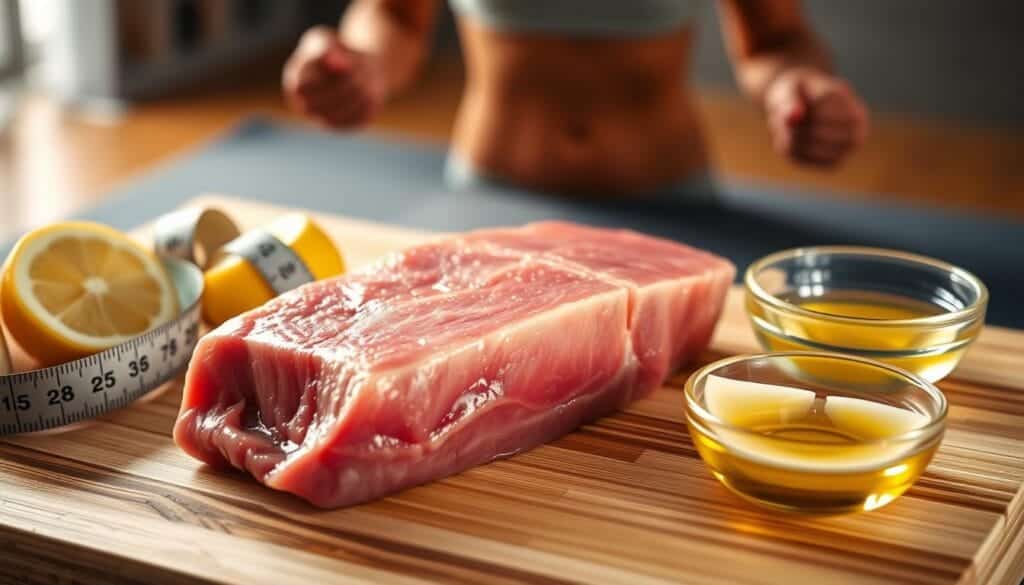
Studies show that eating lean fish like tuna helps with weight loss. Teens who ate lean fish lost about two pounds more than others. This shows tuna’s benefits for weight loss diets.
Understanding tuna’s role in weight loss helps make better diet choices. Its high protein, low calorie, and satiety make it a key part of a weight loss plan.
Different Types of Tuna and Their Weight Loss Benefits
Choosing the right tuna is important for losing weight. Tuna comes in many forms, each with its own benefits.
Fresh vs. Canned Tuna: Nutritional Differences
Fresh tuna has more protein and less sodium than canned tuna. But canned tuna is easier to find and cheaper. Canned tuna in brine is a good choice because it’s low in calories and fat.
Key differences:
- Fresh tuna: Higher protein, lower sodium
- Canned tuna: Convenient, affordable, and available in various packings
Albacore, Skipjack, and Yellowfin Comparison
Albacore tuna is mild and firm, while skipjack is smaller and has less mercury. Yellowfin tuna is known for its rich taste and meaty texture.
Nutritional comparison:
- Albacore: High in protein, moderate in fat
- Skipjack: Lower mercury, often canned
- Yellowfin: Rich in flavor, good source of omega-3 fatty acids
Water-Packed vs. Oil-Packed Options
The liquid in canned tuna affects its calories and fat. Water-packed tuna is better for weight loss. Oil-packed tuna has more calories but can be more filling.
Considerations:
- Water-packed: Lower in calories, suitable for weight loss
- Oil-packed: Higher in calories, may be more satiating
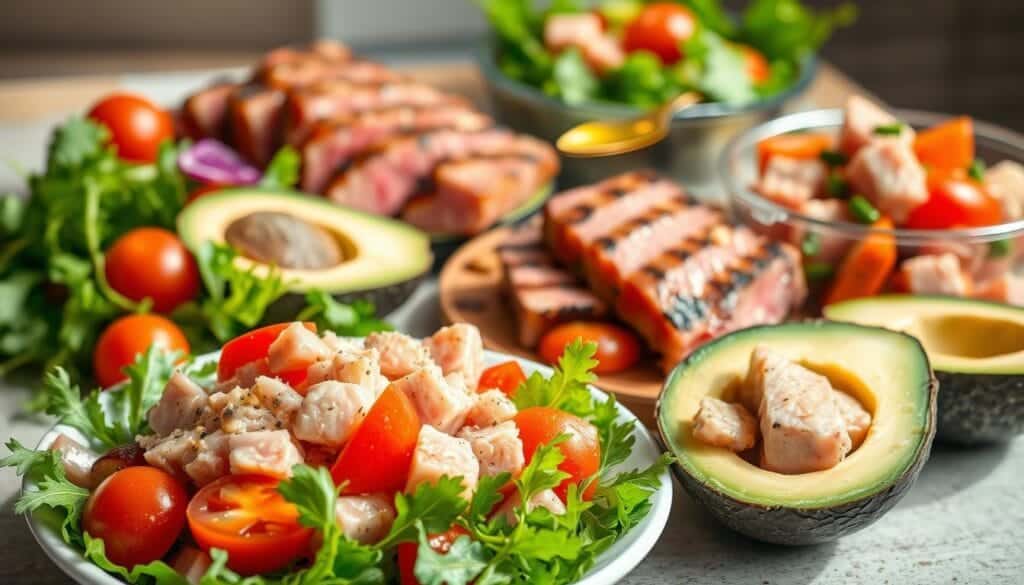
For weight loss, choose canned tuna for losing weight, like water-packed or brine-packed. Making low calorie tuna dishes is easy with veggies and herbs instead of oil.
How Tuna Fits Into a Calorie-Controlled Diet
For those trying to manage their weight, knowing how tuna fits into a calorie-controlled diet is key. Tuna is packed with protein and low in calories. It’s a great choice for losing or keeping off weight.
Calculating Tuna’s Place in Your Daily Calorie Intake
A 3-ounce serving of canned tuna has only 73 calories. It’s a low-calorie addition to your meals. To use tuna well, figure out your daily calorie needs. Then see how tuna fits into your diet.
For example, if you aim for a 1,500 calorie diet, tuna is about 5% of your daily calories.
Key considerations:
- Daily calorie needs change based on age, sex, weight, height, and activity level.
- Tuna is a great protein source for a calorie-controlled diet.
- Pair tuna with other nutrient-dense foods for balanced meals.
Meal Timing and Tuna Consumption
The time you eat tuna can affect its weight loss benefits. Eating tuna in a balanced meal or snack can help control hunger and aid in weight loss. Try eating tuna when you need a protein boost, like after a workout or as a mid-day snack.
Tips for meal timing:
- Include tuna in your post-workout meal to aid in muscle recovery.
- Use tuna as a protein source in salads or sandwiches for a satisfying lunch.
- Mix canned tuna with low-calorie mayonnaise and vegetables for a quick snack.
Portion Control Guidelines
Even though tuna is low in calories, portion control is important. A standard serving is 3 ounces (85g) or about the size of a deck of cards. Be careful with how much tuna you eat and balance it with other protein sources and nutrient-dense foods.
Portion control tips:
- Measure your tuna servings to avoid overeating.
- Combine tuna with vegetables and whole grains for a filling meal.
- Choose water-packed tuna to reduce calorie intake compared to oil-packed options.
Healthy Tuna Recipes for Weight Loss
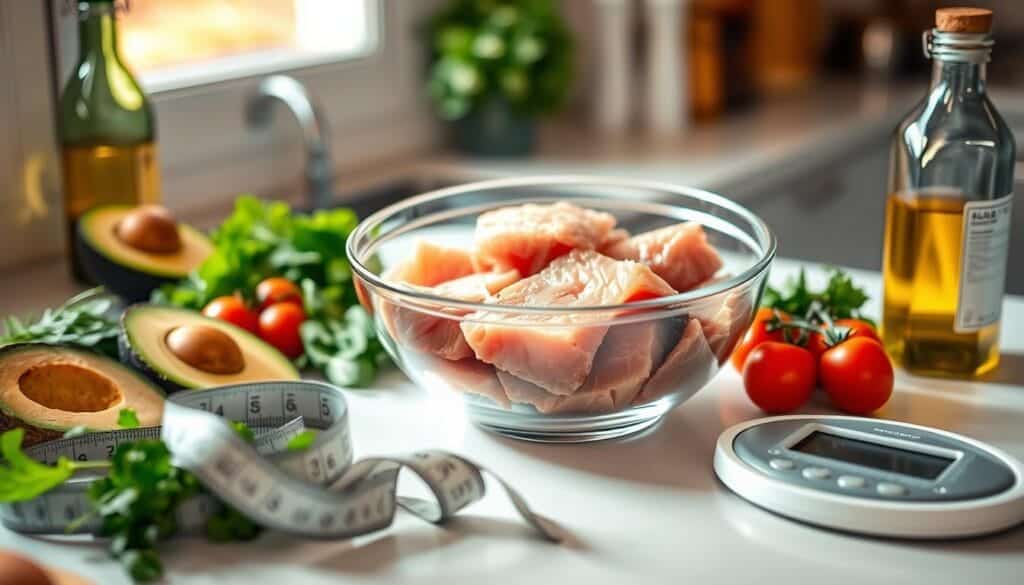
Tuna is great for weight loss because it’s high in protein and low in calories. You can add it to many dishes, from simple salads to complex meals. These dishes help you reach your weight loss goals.
Low-Calorie Tuna Salad Variations
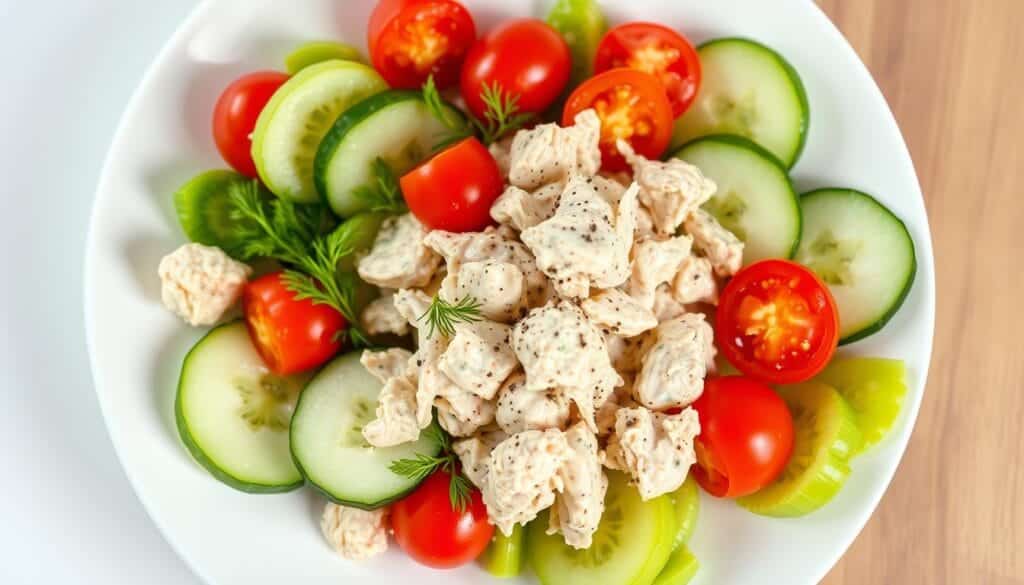
Tuna salad is perfect for weight loss diets. It’s easy to make, full of protein, and can be changed up with different ingredients. This keeps it interesting and healthy.
Mediterranean Tuna Salad
Mix tuna with olives, artichoke hearts, and lemon juice for a Mediterranean-inspired salad. It’s tasty and low in calories. You can put it on greens or use it as a sandwich filling.
Asian-Inspired Tuna Bowls
Make an Asian-inspired tuna bowl with tuna, soy sauce, sesame oil, and veggies like carrots and cucumbers. Serve it over brown or cauliflower rice for a full meal.
Protein-Packed Tuna Meals
Tuna can be the main part of a high protein meal. Grill tuna steaks and serve with quinoa and steamed veggies. It’s both healthy and filling.
Try making tuna patties with canned tuna, breadcrumbs, and egg whites. Bake them until crispy. Pair them with a salad for a complete meal.
Quick and Easy Tuna Snack Ideas
For a quick snack, make tuna salad lettuce wraps. Mix tuna with low-fat mayo and diced celery, then wrap it in lettuce.
Or, top whole grain crackers with tuna, diced tomatoes, and low-fat cheese. It’s a protein-rich snack that’s also high in fiber.
Potential Concerns with Tuna Consumption
Tuna is good for weight loss, but it has some concerns. We need to talk about them.
Mercury Content and Safety Guidelines
Tuna has mercury, a harmful substance. It can hurt your health, mainly if you eat too much. The mercury levels differ in various tuna types.
FDA Recommendations
The FDA has guidelines for eating tuna safely. They say adults should not eat more than 6 ounces of albacore tuna a week. Children and pregnant women should avoid some tuna types.
Special Considerations for Pregnant Women
Pregnant women and young kids should be careful with tuna. They should choose tuna with less mercury, like skipjack and canned light tuna.
Sodium Levels in Canned Tuna
Canned tuna has a lot of sodium. A can can be a big part of your daily sodium. You can pick low-sodium tuna or rinse it before eating.
Sustainable Fishing Considerations
The way tuna is caught can harm the ocean. Some tuna are overfished, and fishing methods can damage marine life. Look for tuna that’s caught sustainably.

Knowing these concerns helps you enjoy tuna safely. It can be part of a healthy diet for weight loss.
Tuna vs. Other Protein Sources for Weight Loss
For those trying to lose weight, knowing about different protein sources is key. Tuna is a lean protein that can help with weight loss. But, it’s important to compare it with other protein-rich foods.

Comparing Tuna to Other Fish
Not just tuna can help with weight loss. Fish like salmon, cod, and tilapia are also good choices. Salmon, for example, is full of omega-3 fatty acids, which are good for the heart and might help with weight loss. But tuna has more protein and fewer calories than some fish, making it a favorite for those watching their calories.
It’s also important to think about mercury levels. Tuna, like bluefin and yellowfin, can have more mercury. On the other hand, fish like sardines and anchovies are low in mercury and full of nutrients.
Tuna vs. Chicken and Other Lean Meats
Chicken and turkey are lean meats often suggested for weight loss. They have a lot of protein and not much fat. Tuna is similar, with about 20 grams of protein in a 3-ounce serving, just like chicken breast.
But tuna usually has fewer calories than chicken. This makes tuna a good choice for those who want to eat less but keep their protein intake high.
Plant-Based Alternatives to Tuna
For those on a plant-based diet, there are good alternatives to tuna. Tofu and tempeh are great sources of protein and can taste like tuna. Legumes, like lentils and chickpeas, are also full of protein and fiber, making them very filling and helpful for weight loss.
Even though these plant-based options are nutritious, they might not have the exact nutrients found in tuna. For example, tuna has a lot of vitamin D and selenium, which are less common in plant-based foods.
Creating a Balanced Tuna Weight Loss Plan
A good tuna weight loss plan is more than just tuna. It’s about eating a balanced diet for lasting weight loss. Dr. Sarah Johnson, a nutrition expert, says, “Eating tuna as part of a balanced diet can help you lose weight. But it’s just one part of a healthy lifestyle.”
Sample Meal Plans Featuring Tuna
Starting a tuna weight loss diet is easier with a sample meal plan. Here’s how to add tuna to your meals.
7-Day Tuna Weight Loss Meal Plan
A 7-day meal plan shows how to spread tuna across your meals. For instance:
- Monday: Tuna salad with mixed greens and whole grain crackers for lunch
- Tuesday: Grilled tuna steak with roasted vegetables for dinner
- Wednesday: Tuna and avocado sushi rolls for lunch
- Thursday: Tuna and white bean salad for dinner
- Friday: Tuna salad sandwich on whole grain bread for lunch
- Saturday: Seared tuna with quinoa and steamed broccoli for dinner
- Sunday: Tuna and egg salad for brunch
Grocery Shopping List
For the meal plan, you’ll need some key items. Here’s a list to start:
- Fresh tuna steaks or cans of tuna
- Mixed greens and other vegetables
- Whole grains like brown rice, quinoa, and whole wheat bread
- Healthy fats like avocado and olive oil
- Protein sources like eggs and white beans
Combining Tuna with Other Weight-Loss Friendly Foods
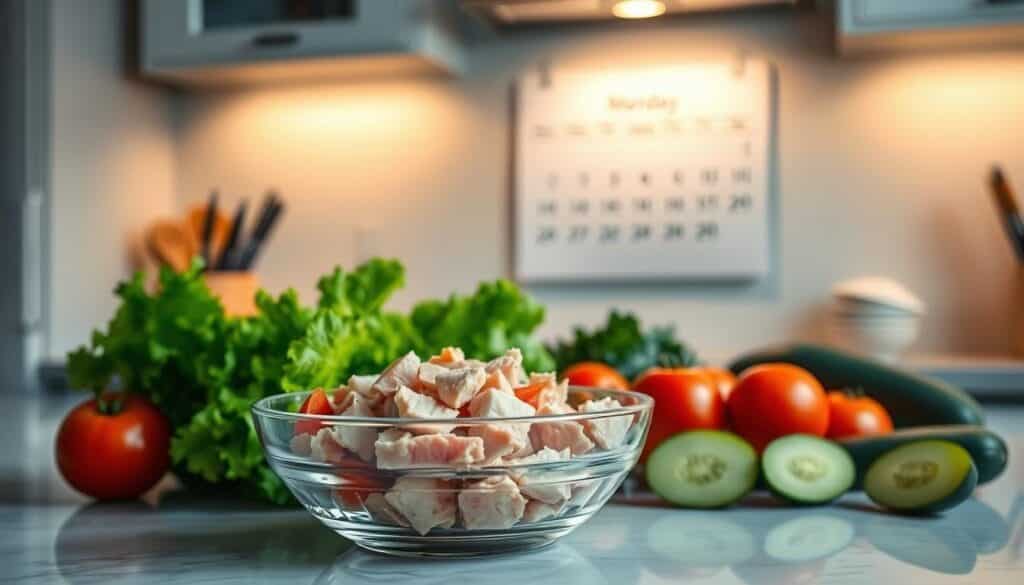
Mixing tuna with other healthy foods boosts its benefits. Some good choices include:
- Leafy greens like spinach and kale
- Legumes such as chickpeas and black beans
- Whole grains like brown rice and quinoa
- Healthy fats found in avocados and nuts
Registered dietitian, Jane Smith, advises, “Adding these foods to tuna makes your diet more varied. It also ensures you get all the nutrients you need.”
Exercise Recommendations to Complement Your Diet
Exercise is key for any weight loss plan. Aim for 150 minutes of moderate activity or 75 minutes of vigorous activity weekly. Also, add strength training to build muscle and increase metabolism.
“Regular physical activity burns calories and boosts health,” says fitness expert, Mark Davis.
Conclusion: Making Tuna Work for Your Weight Loss Goals
Tuna can be a great choice for those trying to lose weight. It’s high in protein and low in calories. This makes it perfect for a weight loss diet.
You can add tuna to your meals in many ways. For example, you can make a tuna salad. Mix it with veggies and healthy fats for a low-calorie dish.
To get the most out of tuna, watch your portion sizes. Also, make sure your diet is balanced. Eating tuna with other healthy foods and staying active can help you lose weight.
Knowing what tuna offers can help you decide if it’s right for your diet. Whether you’re wondering if tuna is good for losing weight or looking for healthy recipes, remember to keep things balanced.
FAQ
Is tuna a good source of protein for weight loss?
Yes, tuna is a great source of protein. It helps build and repair muscle, aiding in weight loss.
How many calories are in a typical serving of tuna?
A 3-ounce serving of canned tuna in water has 150-200 calories. Fresh tuna has 100-150 calories per 3-ounce serving. It’s a low-calorie protein choice.
What are the benefits of choosing water-packed tuna over oil-packed tuna for weight loss?
Water-packed tuna has fewer calories and fat than oil-packed tuna. It’s better for weight loss, providing protein without extra calories.
Can I eat tuna every day as part of a weight loss diet?
While tuna is healthy for weight loss, eating it daily is not advised. It’s important to vary your protein sources and consider mercury content.
How does tuna compare to other fish in terms of weight loss benefits?
Tuna, like salmon and cod, is high in protein and low in calories. But, nutritional benefits vary by fish type and preparation.
Is canned tuna a healthy option for weight loss?
Canned tuna is healthy for weight loss if you pick water-packed, low-sodium types. It’s convenient and protein-rich.
What are some healthy tuna recipes that can aid in weight loss?
Healthy tuna recipes include tuna salad with low-fat mayo, tuna sashimi with low-sodium soy, and grilled tuna with roasted veggies. They’re low in calories and high in protein.
How can I incorporate tuna into a balanced weight loss plan?
Eat tuna in moderation (1-2 servings a week). Pair it with veggies and whole grains. Balance with regular exercise.
Are there any concerns about mercury in tuna that I should be aware of?
Yes, some tuna types have high mercury levels. Choose lower-mercury options like skipjack and canned light tuna. Limit albacore and yellowfin.
Can tuna be part of a sustainable weight loss diet?
Yes, tuna can be part of a sustainable diet if you choose sustainable sources. Vary your protein and balance with other nutrient-dense foods.